APPLICATION NOTE
Fused Silica Ceramic Rollers for Glass Tempering
A practical replacement checklist covering dimensions, end interfaces, runout, surface condition and furnace operating data.
A practical replacement checklist covering dimensions, end interfaces, runout, surface condition and furnace operating data.
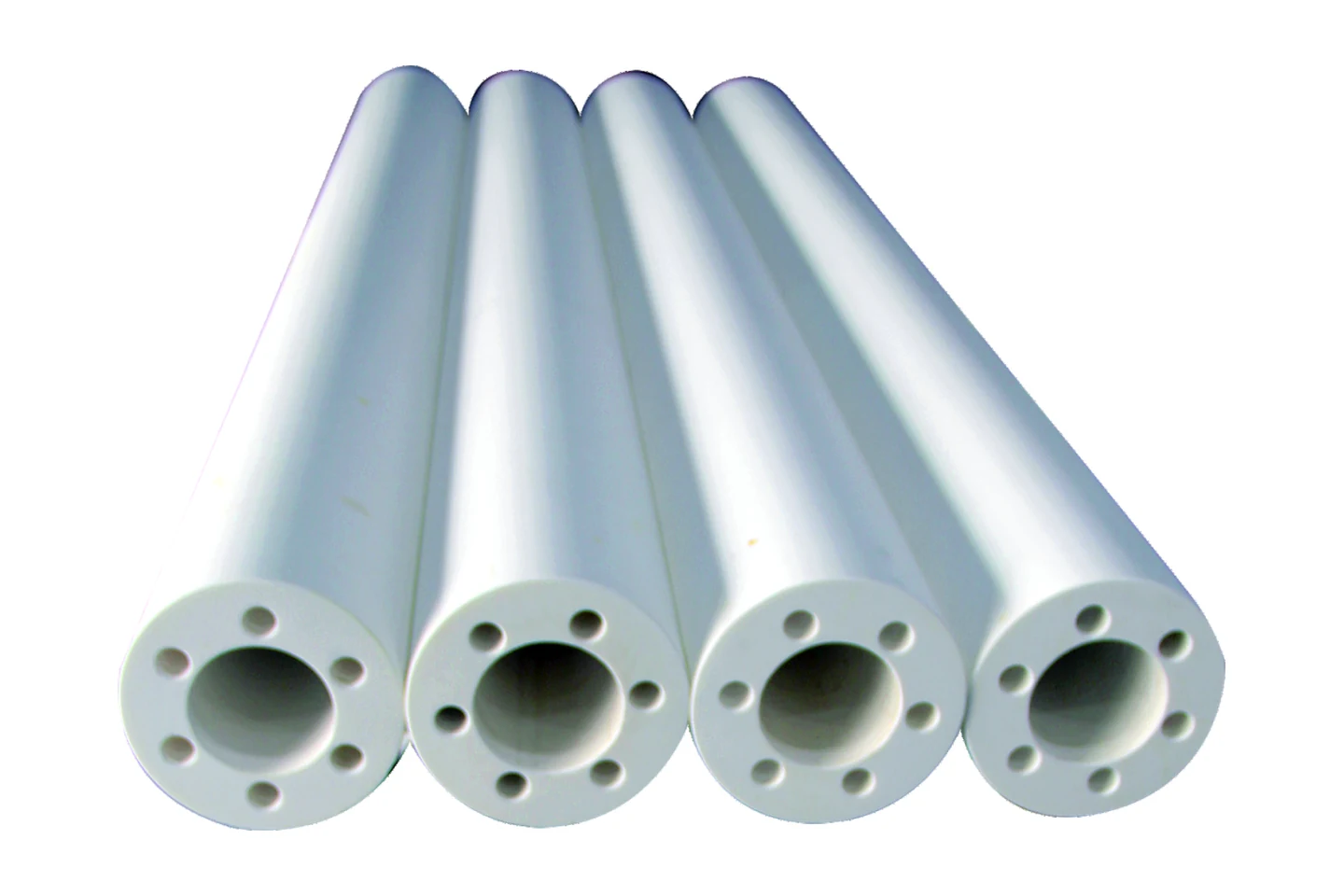
Replacement rollers are not selected by diameter and length alone. In a horizontal glass tempering furnace, the roller is part of a thermal and mechanical system: it supports the glass, transfers it through the furnace and interacts with bearings, end fittings, drive components and the glass-contact surface.
Why fused silica is considered for glass tempering rollers
Fused silica is associated with very low thermal expansion and good resistance to rapid temperature change. Those characteristics explain its established use in glass-tempering and annealing equipment. They do not remove the need to confirm the exact ceramic grade, roller construction and furnace conditions.
Seven items to check before ordering a replacement roller
1. Working diameter and overall length
Separate the glass-contact length, journal or end-fitting length and total assembly length. Identify where each dimension is measured.
2. Solid or hollow construction
Hollow rollers reduce mass and may include internal bores or multi-bore end geometry. The existing roller or equipment drawing should define the required construction.
3. End interface
Provide photographs and dimensions of metal end fittings, shafts, sleeves, keyways, pins or bonded interfaces. A correct ceramic body with the wrong interface will not fit the line.
4. Straightness or radial runout
Name the datum, working length and measurement method. Do not quote a runout value without explaining how it will be verified.
5. Glass-contact surface
State the required surface condition and inspection method. Surface finish must be discussed together with the glass type, temperature and cleaning practice.
6. Thermal cycle and atmosphere
Include continuous and peak temperature, heating and cooling pattern, furnace atmosphere and any chemical or particulate exposure.
7. Quantity and replacement strategy
Identify whether the request is for one emergency replacement, a matched batch or a repeat supply program. Consistency requirements may differ.
Recommended RFQ package
- Furnace make/model if disclosure is permitted
- Current roller drawing or measured sketch
- Photos of the roller body and end fittings
- Working diameter, length and interface dimensions
- Temperature, glass type and line conditions
- Critical inspection points and required records
- Quantity, target date and destination
RYANCERA reviews fused silica ceramic rollers from the application, drawing and acceptance requirements. Send the available information even when the old drawing is incomplete; the missing points can then be identified before quotation.
Frequently asked questions
Is Fused Silica Ceramic Rollers for Glass Tempering a fixed standard product?
Not necessarily. Ceramic grade, geometry, interfaces, quantity and acceptance criteria may change the manufacturing route. The project should be reviewed against the current drawing and service conditions.
What information should be included in the first enquiry?
Send the available drawing or dimensional sketch, material preference, operating temperature and atmosphere, quantity, critical features, inspection requirements and target delivery date.
Can final suitability be confirmed from website data alone?
No. Published information is a starting point for technical discussion. Final suitability and any acceptance values must be confirmed for the specific material grade, drawing and operating environment.
Have a live ceramic component project?
Send the drawing, quantity, operating conditions, critical dimensions and document requirements for an initial feasibility review.