ENGINEERING GUIDE
Fused Silica vs Alumina
A practical selection guide for custom rollers, furnace components and machined technical ceramic parts.
A practical selection guide for custom rollers, furnace components and machined technical ceramic parts.
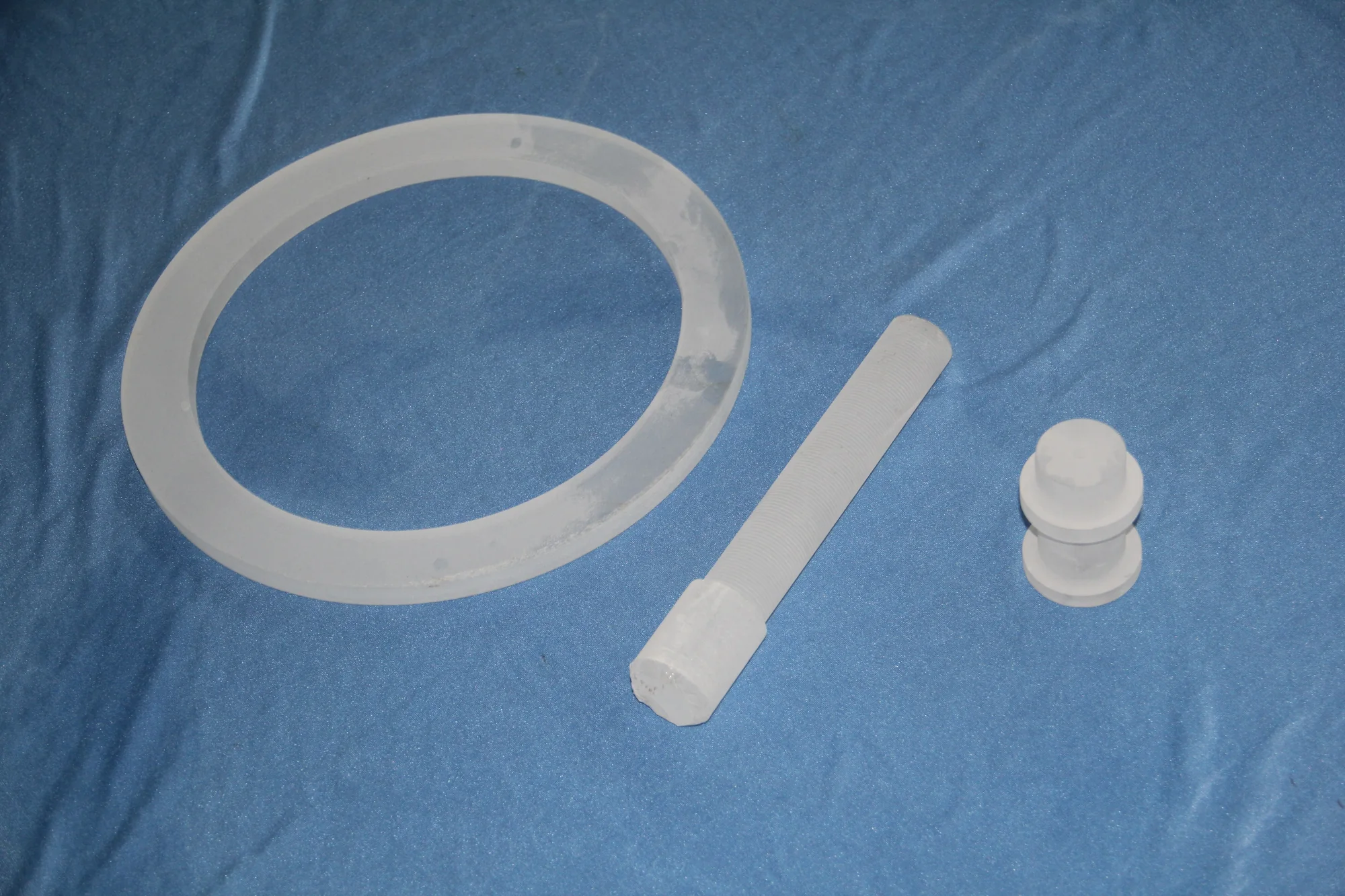
Fused silica and alumina are both technical ceramics, but they are not interchangeable. A useful material decision starts with the operating problem and then checks whether the geometry and manufacturing route are practical.
Start with the application, not a material name
Describe temperature, thermal cycling, load, wear, electrical insulation, atmosphere, contact media, required dimensions and current failure mode. These conditions determine which property set matters most.
When fused silica is often considered
Fused silica is commonly considered for low thermal expansion, resistance to thermal shock and dimensional stability during temperature change. RYANCERA’s current fused silica product paths include ceramic rollers, hollow rollers, furnace plates, cover components and custom shaped parts.
When alumina is often considered
Alumina is commonly considered for wear resistance, electrical insulation, mechanical service and a broad range of industrial component forms. Its actual properties vary by purity, formulation and manufacturing route, so the exact grade must be confirmed.
Quick comparison questions
| Question | Fused silica direction | Alumina direction |
|---|---|---|
| Rapid temperature change? | Often a primary reason for review. | Requires grade- and geometry-specific review. |
| Wear or mechanical contact? | Depends on the contact and grade. | Often a strong starting point. |
| Electrical insulation? | Can be relevant for specific applications. | Common industrial selection reason. |
| Long rollers or furnace shapes? | Established product path. | Possible forms depend on geometry and route. |
| Precision machined parts? | Geometry-dependent. | Common, but machining allowance and tolerances matter. |
Do not mix datasheet values
Property values should be tied to one identified grade, unit, test condition and source. Values from different suppliers or purities should not be assembled into a single “typical” table.
Information needed for a material recommendation
- Operating and peak temperature
- Heating/cooling cycle
- Mechanical load and contact mode
- Atmosphere and chemical exposure
- Electrical requirements
- Drawing, dimensions and critical tolerances
- Inspection and documentation requirements
Frequently asked questions
Is Fused Silica vs Alumina a fixed standard product?
Not necessarily. Ceramic grade, geometry, interfaces, quantity and acceptance criteria may change the manufacturing route. The project should be reviewed against the current drawing and service conditions.
What information should be included in the first enquiry?
Send the available drawing or dimensional sketch, material preference, operating temperature and atmosphere, quantity, critical features, inspection requirements and target delivery date.
Can final suitability be confirmed from website data alone?
No. Published information is a starting point for technical discussion. Final suitability and any acceptance values must be confirmed for the specific material grade, drawing and operating environment.
Have a live ceramic component project?
Send the drawing, quantity, operating conditions, critical dimensions and document requirements for an initial feasibility review.