APPLICATION NOTE
Fused Silica Cover Plates for Crystal-Growth Furnaces
How to define geometry, interfaces, operating conditions and inspection requirements for drawing-based furnace cover components.
How to define geometry, interfaces, operating conditions and inspection requirements for drawing-based furnace cover components.
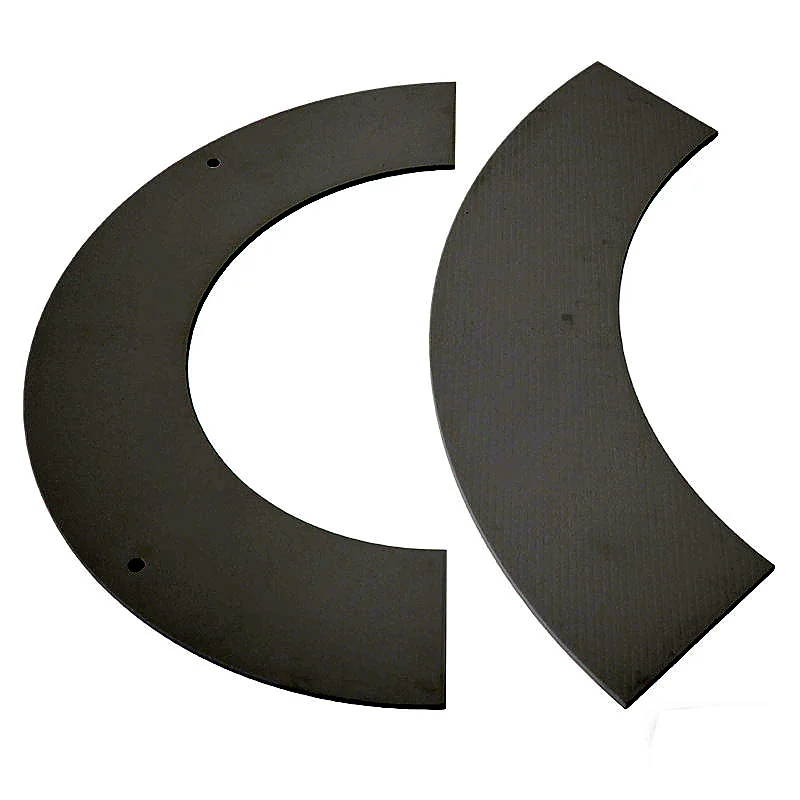
Fused silica insulation covers and shaped plates used around crystal-growth furnace assemblies are drawing-based components. The correct question is not whether a generic “quartz ceramic plate” is available, but whether the material, geometry, interfaces and cleanliness expectations can be aligned with the equipment.
Typical component forms
Public product information and supplied brochure materials show arc-shaped cover plates, perforated plates, inner covers, guide forms, cones and other shaped fused silica furnace components. The exact form remains equipment-specific.
Why fused silica may be selected
Fused silica is considered where low thermal expansion and resistance to temperature cycling are important. Final suitability depends on the actual grade, temperature profile, atmosphere, load, mounting arrangement and required cleanliness.
Drawing features to identify
- Overall diameter, arc angle, thickness and profile
- Hole diameter, quantity, pitch circle and edge distance
- Steps, recesses, radii and mating surfaces
- Flatness, profile or concentricity requirements
- Assembly clearance and support points
- Critical surfaces and zones that must remain free from contact damage
Questions for the equipment or process engineer
Is the part structural, insulating or a process shield?
The function determines which dimensions and material properties deserve priority.
What does the component touch?
Document mating components, fasteners, supports and areas exposed to particles or process gases.
Which records are required?
State dimensional, material, visual and packaging evidence before quotation. Unstated documentation can create delays later.
Useful files for an RFQ
Send the latest PDF drawing, available CAD, assembly view, photographs of the existing part, operating conditions, quantity and target replacement date. If only a damaged sample is available, mark the surfaces and dimensions that must be restored rather than copied from the damage.
Frequently asked questions
Is Fused Silica Cover Plates for Crystal-Growth Furnaces a fixed standard product?
Not necessarily. Ceramic grade, geometry, interfaces, quantity and acceptance criteria may change the manufacturing route. The project should be reviewed against the current drawing and service conditions.
What information should be included in the first enquiry?
Send the available drawing or dimensional sketch, material preference, operating temperature and atmosphere, quantity, critical features, inspection requirements and target delivery date.
Can final suitability be confirmed from website data alone?
No. Published information is a starting point for technical discussion. Final suitability and any acceptance values must be confirmed for the specific material grade, drawing and operating environment.
Have a live ceramic component project?
Send the drawing, quantity, operating conditions, critical dimensions and document requirements for an initial feasibility review.